
In many nursing homes, seniors are well cared for, but daily life can still become passive. When everything is done for a person, it becomes harder to feel needed, useful, or connected.
Open Village was created to change that.
It is a community-based model that helps seniors take on meaningful mini jobs with progression, so they can continue to contribute, build confidence, and participate in everyday life with dignity. At the same time, it opens the nursing home to schools, volunteers, families, and partners, turning it into a shared space for purpose-driven community engagement.
Why Open Village matters
Many senior programmes focus on activities. Open Village focuses on roles, contribution, and progression.
Instead of asking, “How do we keep seniors busy?”, Open Village asks, “How do we help seniors stay involved, valued, and connected to community life?”
This creates a more meaningful environment for seniors and a more sustainable model for care teams and partners.
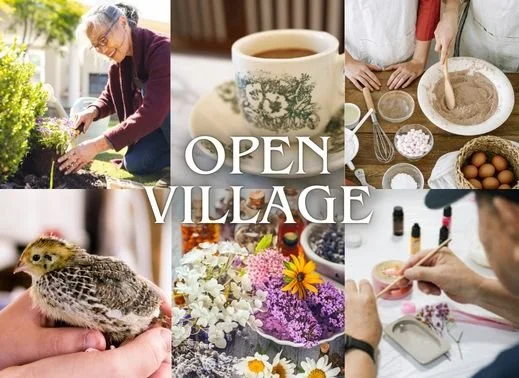
Open Village helps seniors find purpose through mini jobs with progression, from farm-to-table outdoor roles to a senior-run minimart and kopitiam indoors.
How the model works
Open Village is designed as a living ecosystem with both outdoor and indoor participation spaces.
Outdoor participation with visible purpose
Seniors can take part in light, structured roles such as gardening, herb growing, quail care, and aquaponics support. These activities encourage movement, routine, sensory engagement, and a sense of responsibility, while producing tangible outcomes that benefit the wider community.
Indoor roles in familiar community settings
Inside the space, seniors can contribute through a senior-run minimart and kopitiam environment, taking on roles such as stocking, arranging, welcoming guests, simple preparation tasks, and supporting daily routines. These roles can be adapted for different abilities, including dementia-friendly participation.
Mini jobs with progression
What makes Open Village different is that it is not built around one-off activities.
It is designed around mini jobs with progression, where seniors can move from trying a role, to doing it with confidence, to taking ownership, and even encouraging others. This creates routine, confidence, and identity over time.
The result is not just engagement. It is a stronger sense of purpose and belonging.
Community-led facilitation with active seniors
Open Village also engages active seniors from the wider community as facilitators, creating a peer-led model of participation and contribution. These facilitators bring their own expertise, interests, and lived experience into the space, enriching the experiences available to residents.
For example, one facilitator may be passionate about craft, while another may bring strength in gardening. This allows residents to learn, create, and connect through shared interests with peers who have something meaningful to contribute.
Some facilitators are also able to converse in dialects, which helps build trust, ease communication, and create stronger rapport with residents. This makes engagement feel more natural, familiar, and culturally responsive, especially for seniors who are more comfortable speaking in their mother tongue.
A platform for schools, partners, and community
Open Village also reimagines the nursing home as a community platform.
For schools from preschool to university
Schools can partner with Open Village to run baking, craft, service-learning, and intergenerational programmes with seniors. This gives students a meaningful environment to build empathy, communication skills, and social awareness, while allowing seniors to participate as contributors and relationship-builders.
For volunteers and corporate partners
The space supports deeper engagement beyond one-off volunteering. Partners can contribute skills, co-create meaningful experiences, and build authentic relationships with seniors through sustained programmes.
For funders and donors
Open Village offers more than a single activity series. It is a scalable model that combines purposeful ageing, intergenerational engagement, community partnership, and applied learning in one integrated system.
The bigger vision
Open Village is about more than care. It is about contribution.
It shifts the narrative from doing things for seniors to creating spaces where seniors continue to play an active role in community life. It also creates new opportunities for schools, families, volunteers, and partners to engage in ways that are meaningful, structured, and lasting.
Join us in building Open Village
We are looking to partner with:
schools seeking intergenerational learning opportunities
funders and donors who believe in dignified and community-based ageing
corporate and community partners who want to support meaningful participation for seniors
Open Village is scheduled to launch in April 2026. We welcome conversations with partners who want to help shape a more inclusive and purposeful future for senior care.
We welcome conversations with nursing homes, schools, funders, and community partners who want to help shape more purposeful and inclusive models of ageing.
Contact us to explore collaboration opportunities.
We welcome conversations with schools, funders, donors, care organisations, and corporate partners who want to support a more inclusive and purposeful future for senior care.
FAQ
-
Yes. Schools from preschool to university can partner with Open Village for baking, craft, service-learning, and intergenerational engagement programmes with seniors. To support planning and coordination, we kindly ask that enquiries be made at least 3 weeks in advance.
-
Funders and donors can support programme development, community partnerships, pilot implementation, and the creation of meaningful participation spaces for seniors.
-
Instead of focusing only on one-off activities, Open Village creates ongoing roles, routines, and opportunities for seniors to contribute, build confidence, and grow over time.
-
Open Village includes facilitators such as active seniors from the wider community who bring their own expertise and passions, such as craft and gardening. Some are also able to converse in dialects, which helps build trust and rapport with residents.
