How JC Students Learnt to Design Inclusive Sensory Activities for Children
Two classes. 60 students. One shared goal: to design for children with empathy and purpose.
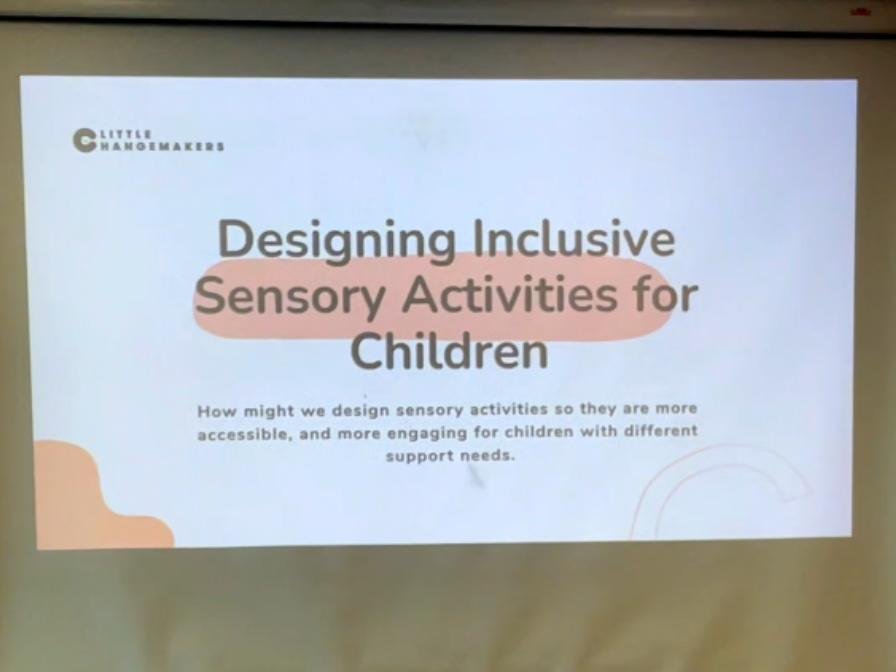
Little Changemakers recently conducted a 90-minute design thinking workshop for junior college students, using our own programme design framework to guide students in creating inclusive sensory activities for children.
The session helped students understand how sensory needs can affect participation, and how everyday activities can be redesigned so children with different support needs can take part with greater clarity, confidence, dignity, and joy.
Why this workshop matters
Many activities assume that every child can sit still, follow verbal instructions, tolerate noise, use fine motor skills, and participate confidently in a group.
But for some children, the activity may feel overwhelming, confusing, physically difficult, or emotionally unsafe.
Instead of asking, “Why can’t this child join?”, students were guided to ask better design questions:
What is this activity asking the child to do?
What barriers may we have accidentally created?
What support could make participation possible?
How can we preserve choice, dignity, joy, and success?
What students learnt
Students were introduced to sensory input, sensory sensitivity, sensory seeking, sensory modulation, and the big cup / small cup analogy.
They also learnt to use three frameworks:
Little Changemakers’ 4 Domains: Physical, Mental, Social, Emotional
MOE NEL learning areas: including Motor Skills, Social & Emotional Development, Language & Literacy, Aesthetics & Creative Expression, Discovery of the World, and Numeracy
Universal Design: choice, multiple ways to participate, clear structure, sensory access, scaffolded challenge, and emotional safety
The design challenge
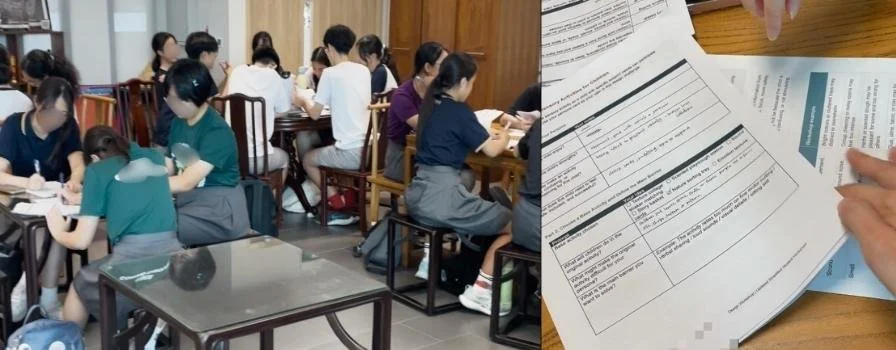
Students worked with persona cards representing children with different support needs. They then selected a base sensory activity and redesigned it so their persona could participate more meaningfully with peers.
The design sprint followed this flow:
Understand → Choose → Define → Adapt → Map → Pitch
Students had to consider:
sensory comfort
physical access
communication access
attention and sequence
social-emotional safety
safety and boundaries
From awareness to action
The strength of this workshop is that students do not just learn about inclusion. They practise designing for it.
They learn that inclusive design is not about removing all challenge. It is about removing unnecessary barriers so more children can participate with confidence and dignity.
A small design change, such as using visual steps, offering tool choices, reducing clutter, adding a movement role, or allowing a child to point instead of speak, can make a big difference.
Bring this workshop to your school
Little Changemakers offers customisable talks and workshops for schools, junior colleges, polytechnics, universities, and organisations.
Topics can include:
design thinking for social good
inclusive sensory activity design
VIA and service-learning
social enterprise
eldercare innovation
intergenerational community work
CSR and community impact