
VIA & Service-Learning Redesign
Help students move from good intentions to sustainable community impact.
Little Changemakers partners secondary schools and junior colleges to strengthen VIA, service-learning and student leadership through design thinking, needs discovery and practical impact systems.

Design Thinking + AI for VIA
Design a More Meaningful VIA
Think Better With AI applies Little Changemakers' proprietary human-centred design model to help students practise VIA design with AI.
Students question community-grounded perspectives, challenge assumptions and develop ideas before deciding what should actually be taken forward.
The common gap
Many student projects start with enthusiasm, but need stronger structure.
Student ideas are often creative and well-intentioned. The challenge is helping teams slow down enough to define the real need, understand beneficiaries, test assumptions and design a project that can be sustained beyond a presentation or one-off event.
Gap 01
Solution-first thinking
Students may jump quickly to activities, campaigns or digital solutions before validating the problem.
Gap 02
Unclear beneficiary focus
Projects can become too broad when the target group, context and specific need are not clearly defined.
Gap 03
Weak stakeholder mapping
Teams may overlook who needs to support, approve, use, maintain or continue the idea.
Gap 04
Limited feasibility testing
Students need support to evaluate time, resources, adoption, safety, operations and continuity.
Gap 05
Unclear ownership
Good ideas may fade when roles, handover and future ownership are not planned early.
Gap 06
Hard-to-measure impact
Students need practical ways to define outcomes, reflect meaningfully and document learning.
Our approach
Impact Systems Design for schools.
We guide students to align beneficiaries, outcomes and feasibility before they build a solution. The goal is not to increase the number of activities, but to improve the quality, clarity and sustainability of student-led impact.
This gives teachers a repeatable structure that can be applied across cohorts, VIA cycles and student leadership groups.
Discover
Identify needs, gaps and assumptions through structured discovery and observation.
Define
Form a clear problem statement with beneficiaries, scope and constraints.
Design Outcomes
Clarify what meaningful change looks like before proposing a solution.
Assess Feasibility
Evaluate resources, ownership, adoption, continuity and sustainability.
Plan Implementation
Structure roles, cadence, testing, iteration and handover.
Measure Impact
Embed reflection, learning evidence and simple impact tracking.
Engagement formats
Choose the format that fits your school’s VIA stage.
We can support a short introduction, a deeper redesign lab, or an applied immersion where students observe real community settings and translate insights into stronger project ideas.
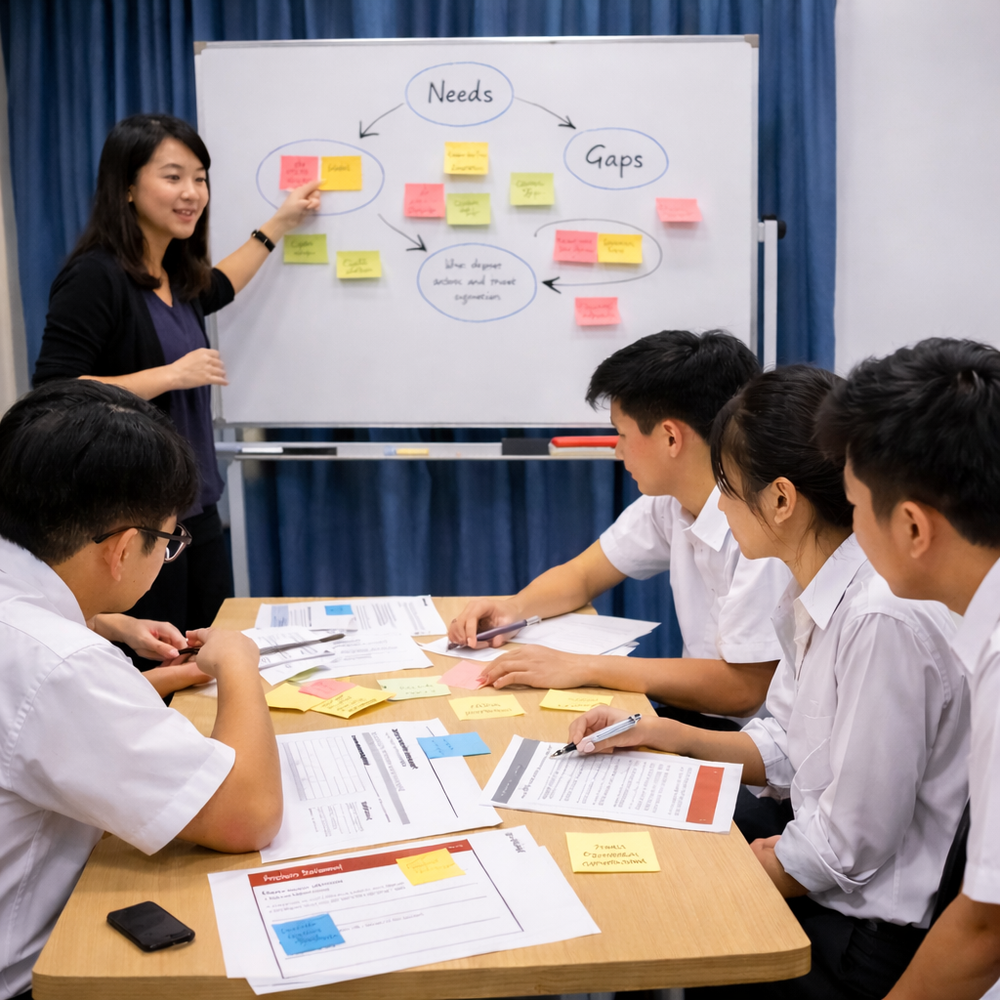
60 to 90 minutes
Impact Systems Masterclass
Best when your school wants to introduce a structured, needs-first approach before students begin projects.
- Good for VIA committees and leadership cohorts
- Addresses solution-first habits, including defaulting to “an app”
- Case-based learning grounded in real community contexts
- Useful when time is limited but the school needs a common framework
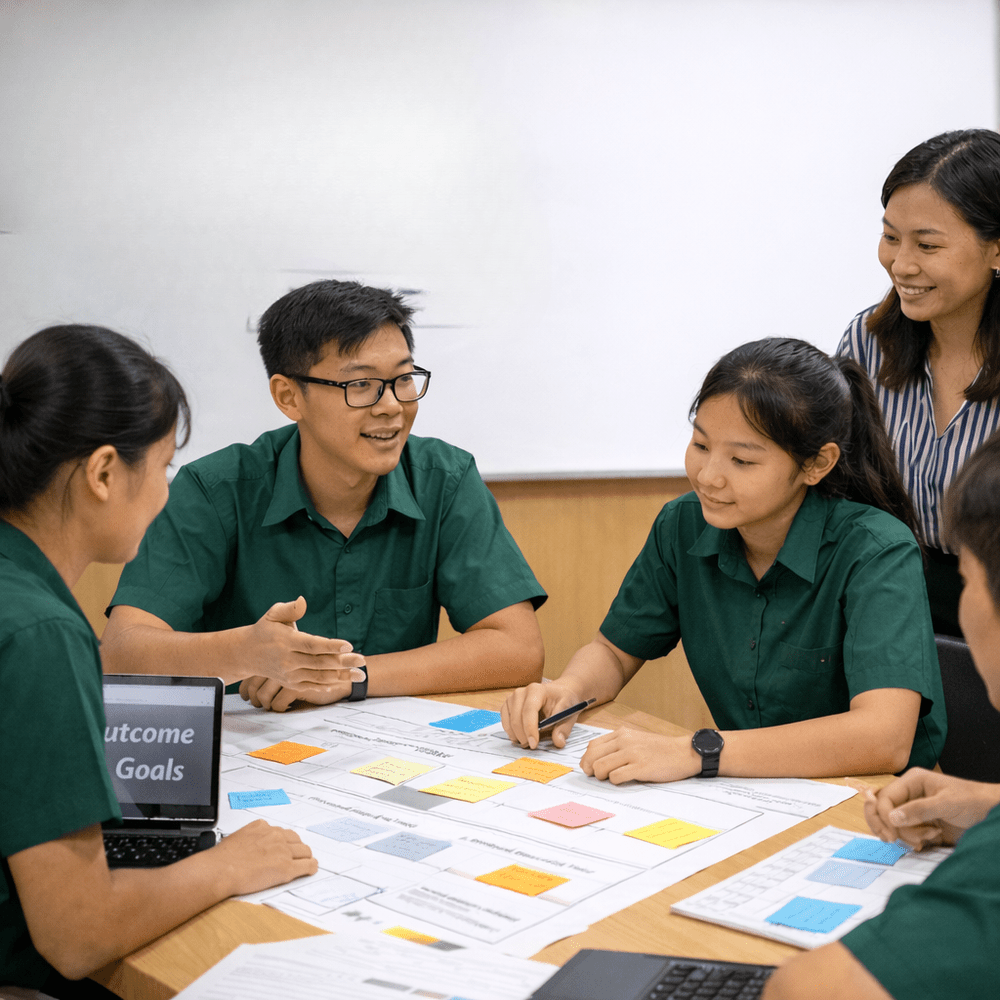
Half-day or multi-session
VIA Redesign Lab
Best when your school is reviewing, refreshing or strengthening its VIA and service-learning framework.
- Develops clearer problem statements and outcomes
- Strengthens student ownership and continuity
- Uses practical templates for feasibility and reflection
- Improves proposal quality across cohorts
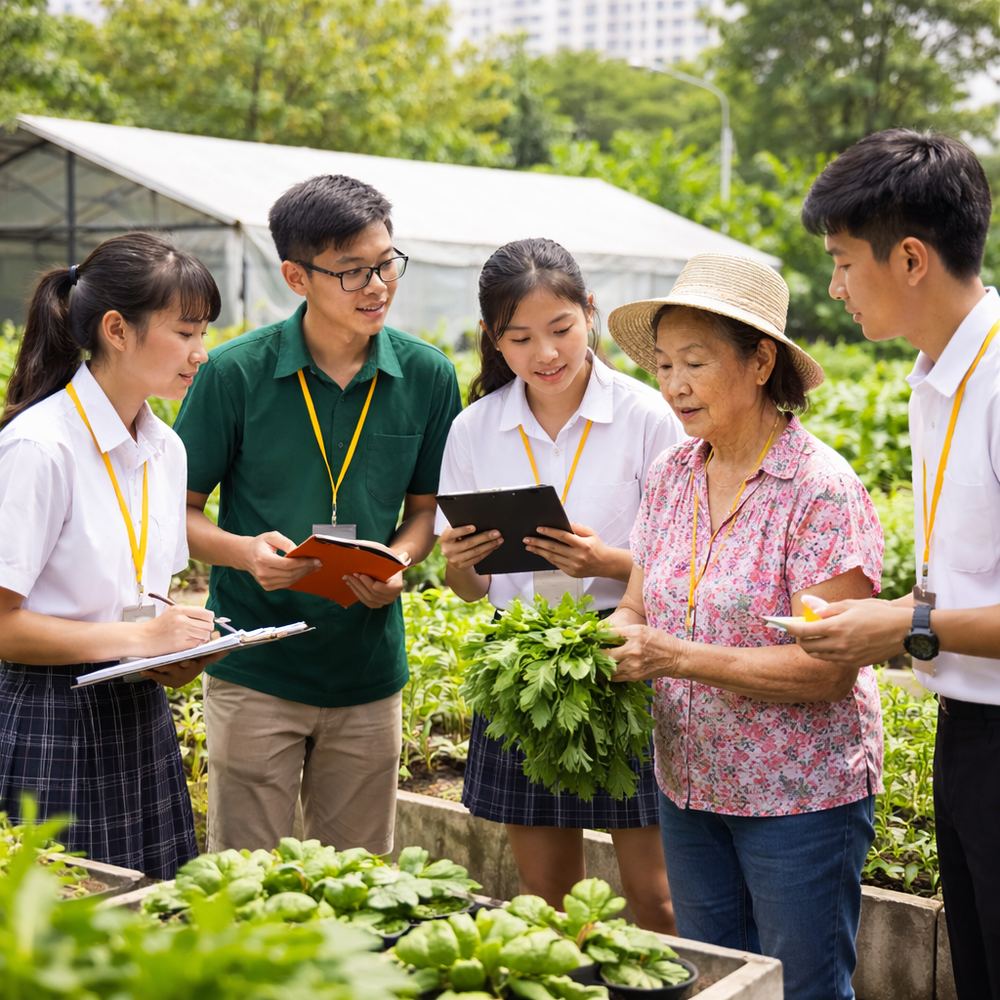
On-site immersion
Open Village Immersion Experience
Best when your school wants applied learning beyond classroom case studies.
- On-site at Taman Jurong where suitable
- Students observe stakeholder complexity and operational constraints
- Supports ethical thinking and implementation planning
- Useful for deeper student-led project development
What your school may receive
Reusable tools that help teachers support future VIA cycles.
Depending on the engagement format, we can provide practical tools and prompts that support student reflection, project planning and impact documentation.
Institutional impact
Stronger VIA structure can improve both student learning and project quality.
When schools adopt a structured impact systems approach, students can develop clearer project thinking while teachers gain a more consistent way to guide, assess and sustain student-led initiatives.
- Greater clarity in student proposals and project scope
- Stronger alignment between VIA intentions and measurable outcomes
- Improved student ownership and accountability
- Reduced coordination ambiguity for teachers
- Clearer documentation for reporting and reflection
- More sustainable initiatives beyond a single cohort
Why Little Changemakers
We bring real community design experience into student leadership learning.
Little Changemakers works across community, senior care, inclusive learning, CSR and social impact settings. This helps students move beyond theoretical ideas and understand how community projects actually work on the ground.
Design thinking in real life
Students learn how to notice gaps, validate needs and design with empathy and purpose.
Grounded community examples
We draw from real work with seniors, children, families, persons with disabilities and community organisations.
Practical school tools
Our frameworks are designed to be usable by students and manageable for teachers.
Authentic leadership
The focus is meaningful service-learning. Portfolio strength is a byproduct of genuine work.
FAQ
Common questions from schools.
Can you customise based on our school’s VIA theme?
Yes. We customise the engagement based on your VIA focus, student level, cohort size, timeline and intended outcomes.
What if students tend to propose digital solutions too quickly?
We guide students through needs discovery, stakeholder mapping and feasibility assessment before ideation, so they can consider adoption, sustainability and real-world constraints.
Is this aligned with school learning outcomes?
Our approach supports authentic learning, student agency, structured reflection, empathy, responsibility and meaningful service-learning outcomes within school contexts.
Is this focused on DSA preparation?
No. The focus is authentic service-learning and meaningful student leadership development. Any portfolio strength that emerges should be a byproduct of structured and genuine work.
Can this be done as a short assembly or leadership talk?
Yes. The Impact Systems Masterclass can be delivered as a 60 to 90 minute introduction for student leaders, VIA committees or selected cohorts.
Can students visit Open Village?
Where schedule and site suitability allow, students can join an applied immersion at Taman Jurong to observe real community settings, stakeholder needs and implementation constraints.
Explore a structured VIA engagement
Reviewing your VIA framework or student leadership projects?
Share your student level, VIA focus, cohort size, timeline and intended outcomes. We will recommend a suitable masterclass, redesign lab or immersion format.