
Design Thinking for Anti-Shop Theft: How College & University Students Designed Impactful Campaigns
Can Design Thinking be applied to poster design?
For an anti-shop theft project developed for the Singapore Police Force (SPF), Little Changemakers used Design Thinking to help youths move beyond simply creating attractive posters.
Instead of starting with colours, slogans or illustrations, we started with something much more important:
real human experience.
Our approach is simple:
Research first. Ideate second. Design for real people.
Designing for a real social issue
The project challenged participants to create anti-shop theft messages for SPF.
But before asking them to design a poster, we wanted them to understand what theft actually means to the people affected by it.
Rather than immediately asking:
“What slogan can you think of?”
We began with user research and personal reflection.
Participants were asked to recall an incident involving theft that they had personally experienced, witnessed, or heard about from their family or loved ones.
What happened?
What was taken?
And, most importantly:
How did that experience make you feel?
Participants reflected on emotions such as anger, frustration, helplessness, disappointment and the sense of violation that can come from having something taken without permission.
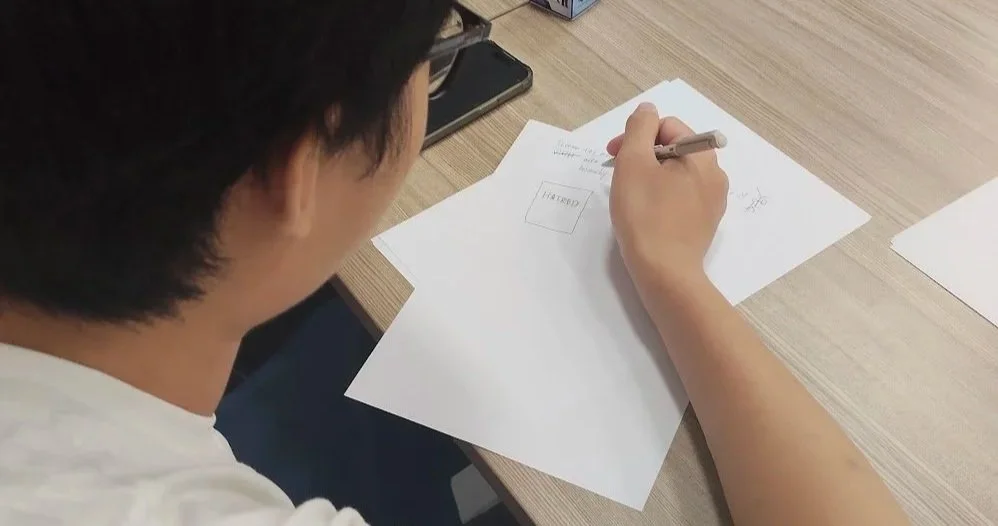
We then asked another question:
“Imagine you are now face to face with the person who stole from you. If you could say one thing to that person, what would you say?”
This was an important turning point.
The anti-theft message was no longer something participants had to invent for an assignment.
It began to emerge from real experiences and real emotions.
From human experience to an anti-theft message
For a public communication campaign such as SPF's anti-shop theft initiative, a poster needs to do more than look attractive.
It needs to communicate.
It needs to influence how someone thinks about an issue.
And ideally, it should encourage a behaviour.
After gathering and reflecting on experiences, participants completed mini exercises to distil their thoughts into a core message.
What is the one thing they want someone considering theft to understand?
What consequence do they want the audience to think about?
What emotion do they want to evoke?
What behaviour are they hoping to encourage?
Only when this message became clearer did we move into design.
Translating the message into visual language
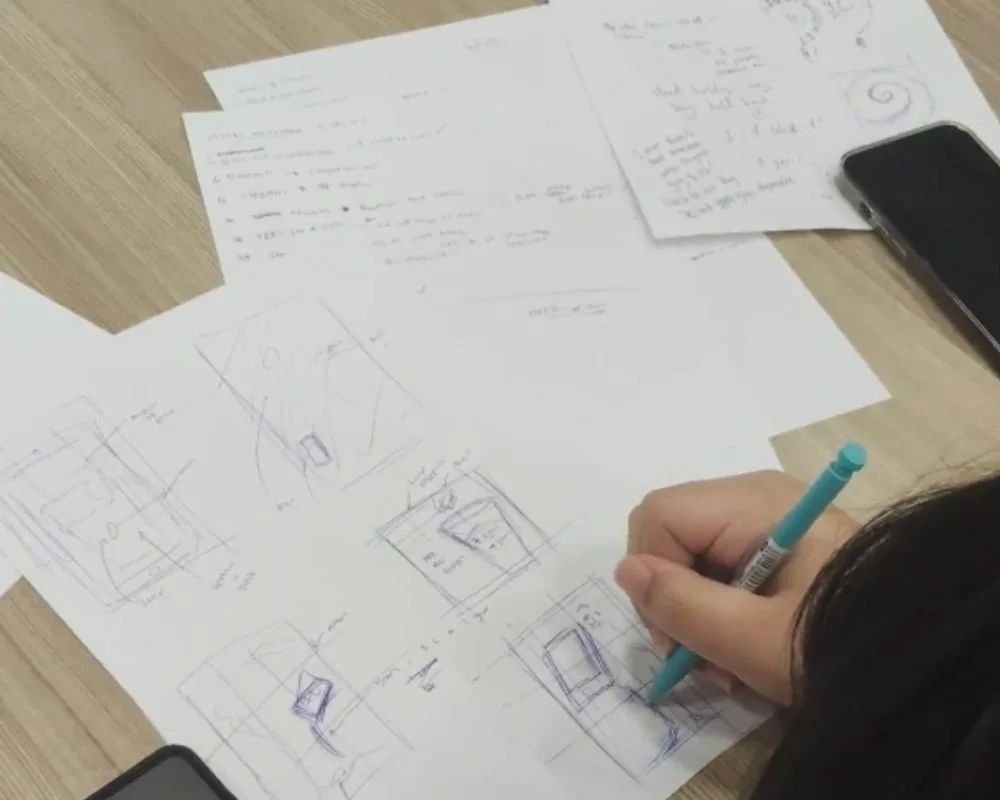
Participants then explored how an idea could be communicated through:
visual metaphors
symbols
imagery
words and phrases
contrast
composition
emotional cues
For example, an anti-theft poster does not necessarily need to show someone physically stealing an object.
Could a broken object represent broken trust?
Could an empty space communicate loss?
Could an ordinary object become a metaphor for the wider consequences of a momentary decision?
This shifted the design conversation from:
“What should my poster look like?”
to:
“How can my poster communicate what I want people to understand?”
See. Think. Feel. Do.
We then introduced another layer of intentionality.
Participants considered what they wanted their audience to:
SEE
What should immediately catch someone's attention?
THINK
What should the audience understand or reconsider about shop theft?
FEEL
What emotion should the message evoke?
DO
What behaviour or action should follow?
This gave participants a simple way to evaluate their ideas.
Rather than asking only:
“Does my poster look good?”
they could ask:
“Is the poster creating the response it was designed to create?”
For an SPF anti-shop theft message, the desired journey might be:
SEE an unexpected visual
→ THINK about the human consequences of theft
→ FEEL empathy, responsibility or concern
→ DO make the choice not to steal.
That is communication design with intent.
Design Thinking is also communication thinking
Design Thinking is often associated with designing products, apps or services.
But this SPF project demonstrates that the same principles can be applied to public communication and behaviour-change messages.
A poster is also a designed experience.
For this project, the design journey looked like this:
Real Experience → Emotion → Insight → Core Message → Visual Metaphor → See, Think, Feel, Do → Poster Design
The poster was the final output.
The thinking came first.
More than an anti-shop theft poster
Working on a real brief for the Singapore Police Force also gave participants a meaningful context for applying Design Thinking.
They were not designing for an imaginary scenario.
They were considering how communication could contribute to awareness around a genuine social issue: shop theft prevention.
Through the project, participants practised how to:
investigate real human experiences
recognise emotions and perspectives
identify meaningful insights
develop a focused core message
translate ideas into visual metaphors
design intentionally for an audience
consider the behavioural response they want to create
explain the reasoning behind their design decisions
The result was more than a poster-making exercise.
It became an opportunity to explore how Design Thinking, visual communication and public education can work together to address a real-world issue.
Research first. Design second.
One lesson from the SPF anti-shop theft project is particularly important to us. Creative work should not always begin with creativity. Sometimes it should begin with listening.
Before deciding what message to create, understand the experience.
Before choosing the visual, clarify the meaning.
Before designing the solution, understand the people.
That is why our Design Thinking approach continues to begin with:
Research first. Ideate second. Design for real people.
And whether we are working on an anti-shop theft campaign for the Singapore Police Force, a community programme, a student VIA project or a new service, the principle remains the same:
Meaningful design begins with understanding people.
Want to bring Design Thinking into your school or organisation?
Little Changemakers runs practice-led Design Thinking talks, workshops and design sprints grounded in real community challenges, user research and social impact.
Explore Design Thinking Talks & Workshops →
