
Why User Research Should Come Before Ideation in Design Thinking
One of the easiest mistakes in Design Thinking is to start generating solutions too early.
When we see an underused garden, our instinct may be to add more plants, animals or activities. But before asking what we could create, we need to understand why the space is underused in the first place.
At Little Changemakers, our approach is simple:
Research first. Ideate second. Design for real people.
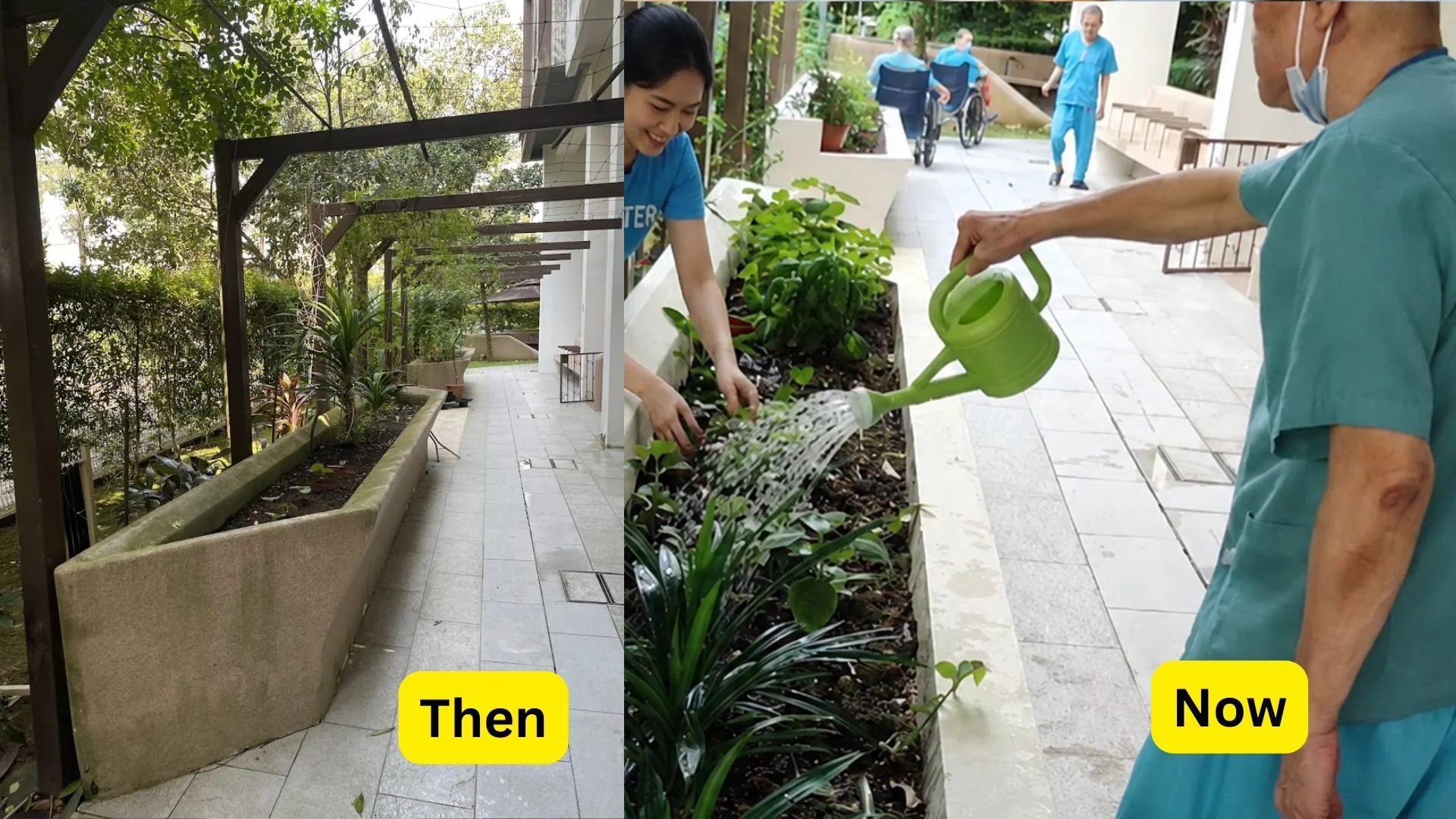
Garden at a nursing home
The Open Village Challenge
At a nursing home, we saw a large garden with tremendous potential. It would have been easy to approach it as a landscaping or activity-design project.
But research revealed a more fundamental challenge: manpower.
Nursing home staff already have essential responsibilities centred on resident care, safety and daily needs. Even with a beautiful garden, someone still needs to prepare residents, assist with wheelchairs, accompany them downstairs and encourage participation.
Adding gardens, chickens, aquaponics and programmes also creates more work. Someone needs to maintain the space, feed the animals, organise activities, coordinate volunteers and manage schedules.
The garden was visible. The manpower problem was structural.
Senior residents play an active role in shaping and caring for the garden, making it a space created with them, not just for them.
Reframing the Problem
Instead of asking:
How might we make the garden more attractive?
we reframed the challenge:
How might we help seniors regain a sense of purpose in life?
That led us away from simply creating more activities for seniors.
We began designing meaningful roles with seniors.
Residents can help care for plants, support workshops, learn to make coffee, serve breakfast or tea, restock the minimart, assist with redemption and welcome visitors.
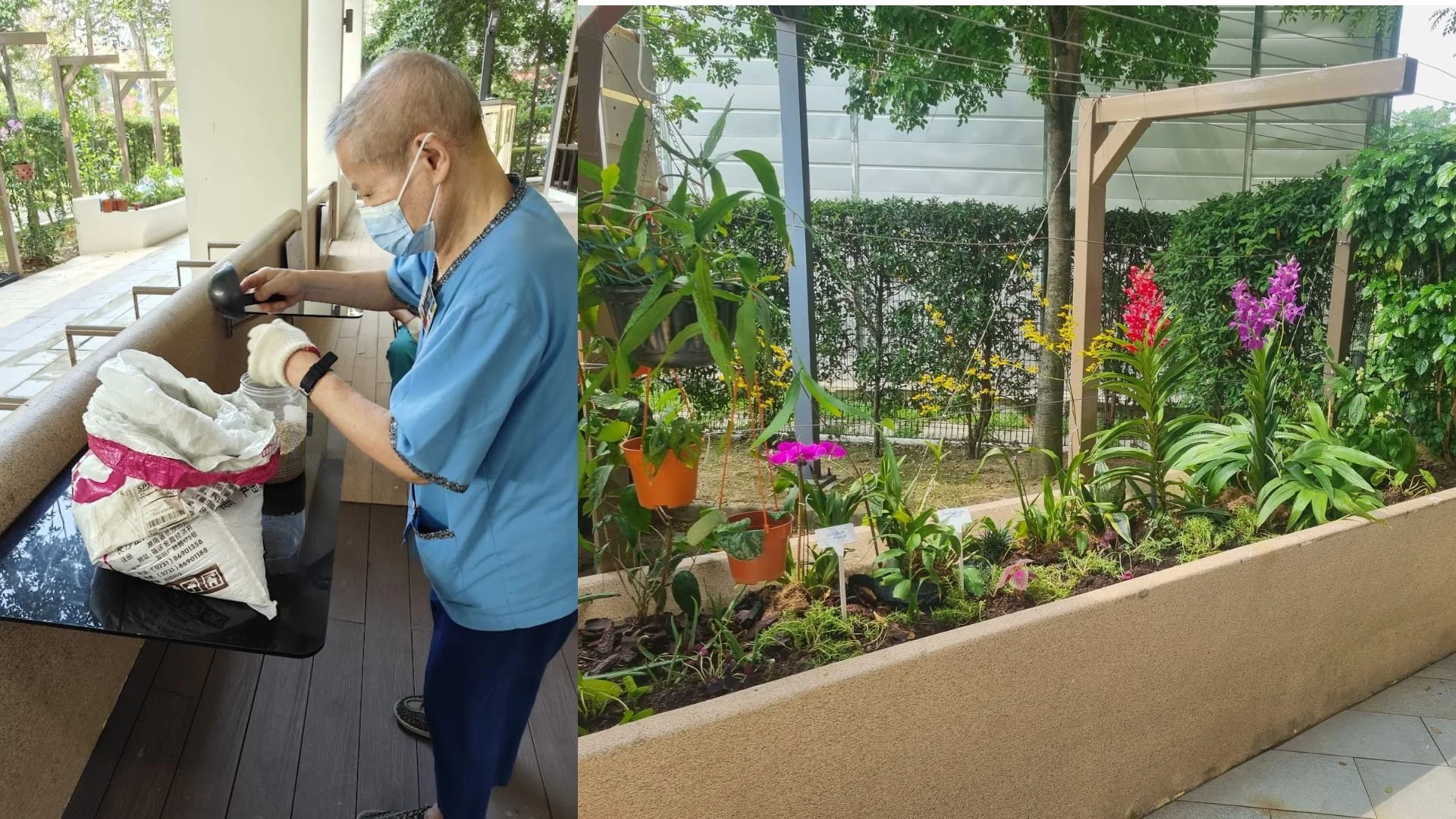
We are also developing a Garden Special Ops team made up of nursing home residents, training them to take a more proactive role in caring for the garden.
They are there every day. Why not make them part of building and sustaining the place?

Senior residents take on meaningful garden roles, from preparing natural materials to watering and caring for plants, contributing actively to the life of the garden.
Reward, Redeem, Rehabilitate
Open Village is supported by our 3R system: Reward, Redeem and Rehabilitate.
Seniors are rewarded for participating and contributing. They can redeem what they earn within the village ecosystem, while repeated roles encourage continued participation, confidence and capability.
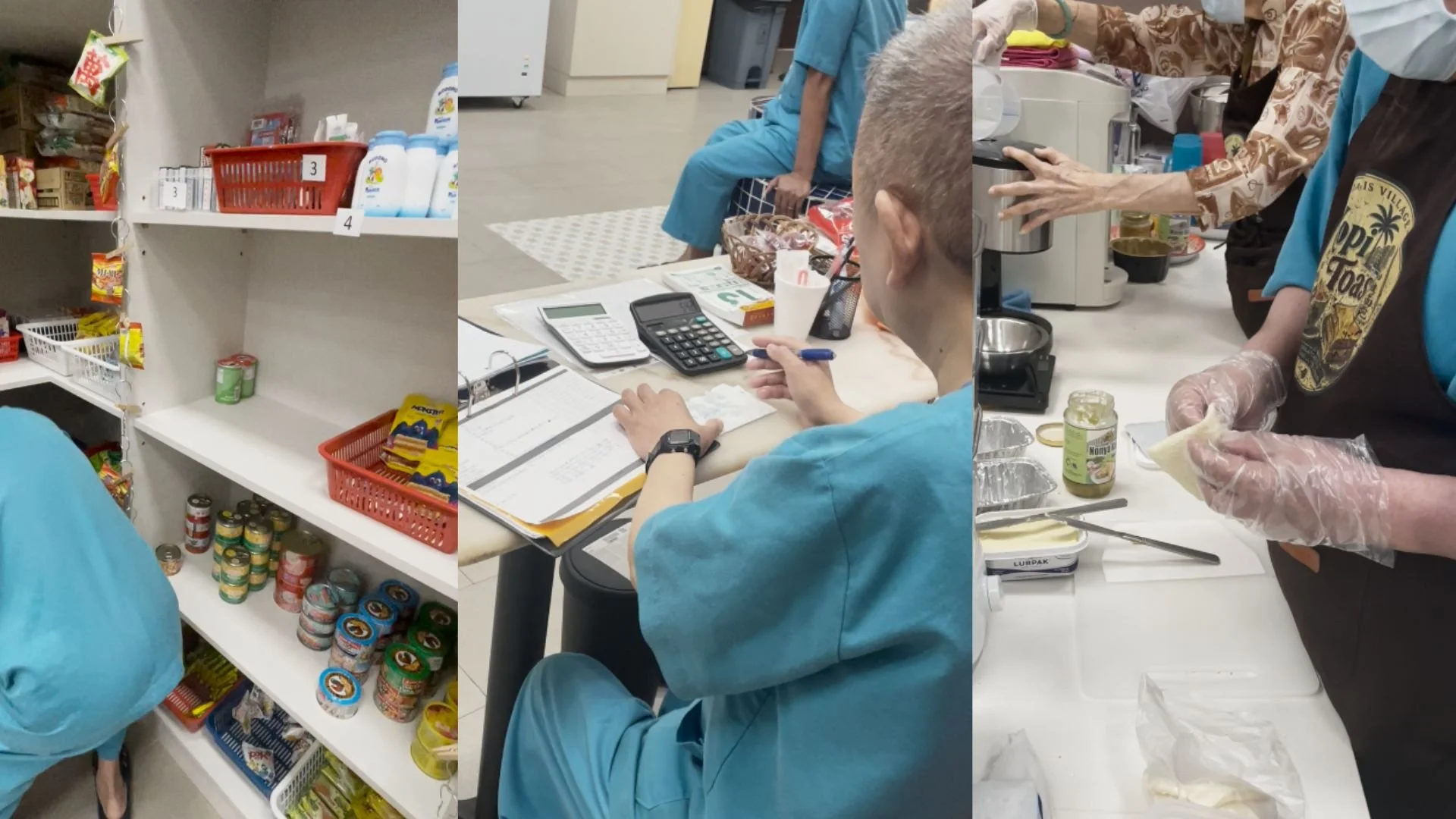
Senior residents take on meaningful roles in the mini-mart and kopitiam, building confidence, contribution and purpose.
The idea is to create progression rather than one-off engagement:
Contribute → Reward → Redeem → Build confidence → Take on more
Building a Community Around the Residents
The ecosystem extends beyond the nursing home.
We encourage active retirees and seniors from the community to take on meaningful paid roles within Open Village.
They bring their own interests and expertise. Someone passionate about craft can support creative programmes. An experienced gardener can help care for the garden. Others may enjoy hospitality, befriending or welcoming volunteers.
Older adults can also connect naturally with nursing home residents through shared dialects, languages, memories and life experiences. This creates opportunities for a more peer-to-peer form of companionship.
Volunteers and the wider community then strengthen the ecosystem further.

The garden becomes both inspiration and material, as senior residents transform plants, flowers and natural textures into artworks of their own.
From an Activity to an Ecosystem
What began as an underused garden is becoming something much larger.
Residents contribute. Active seniors from the community contribute. Volunteers participate. Staff can continue prioritising their core care responsibilities. The garden, kopitiam, minimart and activity spaces provide different ways for people to play a role.

Active retirees bring their own strengths and experience into Open Village, contributing to areas such as gardening, animal care and everyday community life while building peer-to-peer connections with residents.
One reframed problem begins addressing purpose, manpower, social connection, participation and community ownership at the same time.
That is why user research matters.
If we had started with brainstorming, we might have created a beautiful garden full of activities.
But the underlying question would remain:
Who is going to make all of this happen every day?
Research helped us move from:
“Let’s create more activities for seniors.”
to:
“Let’s create an ecosystem where seniors can contribute.”
That is a fundamentally different design brief.
Research first. Ideate second. Design with people, not just for them.

