
Sensory Trails in Schools: Designing Movement Breaks for Different Sensory Needs
Mainstream schools include students with increasingly varied abilities, learning profiles and sensory needs. For some children, sitting and concentrating for long periods can be demanding. Short opportunities to move during recess or transitions can support sensory regulation before they return to classroom learning.
A well-designed sensory trail can provide different forms of sensory input. Proprioceptive activities such as hopping and jumping provide pressure and resistance through the muscles and joints. Vestibular activities such as balancing, turning and changing direction support movement and balance. Trails can also encourage motor planning, coordination and social play.
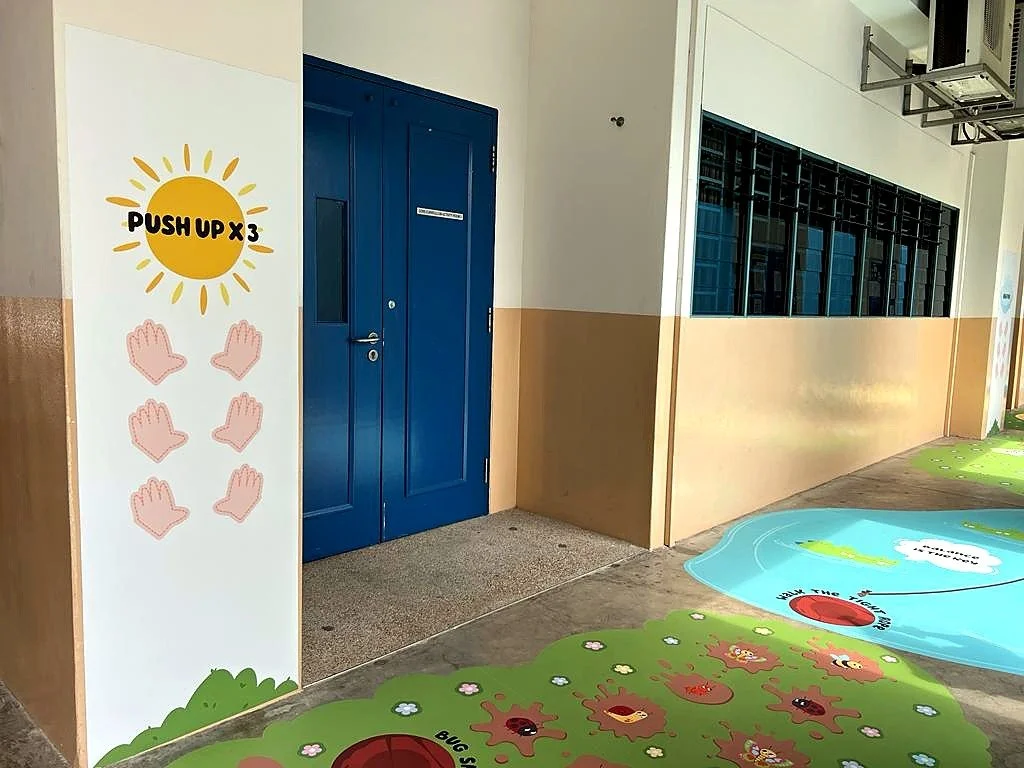
This is why activities such as hopscotch, jumping sequences, balance paths and movement prompts are included deliberately. Our sensory trail designs are developed in collaboration with occupational therapists and teachers, bringing together an understanding of sensory needs with practical knowledge of how students actually move, learn and interact within the school environment.
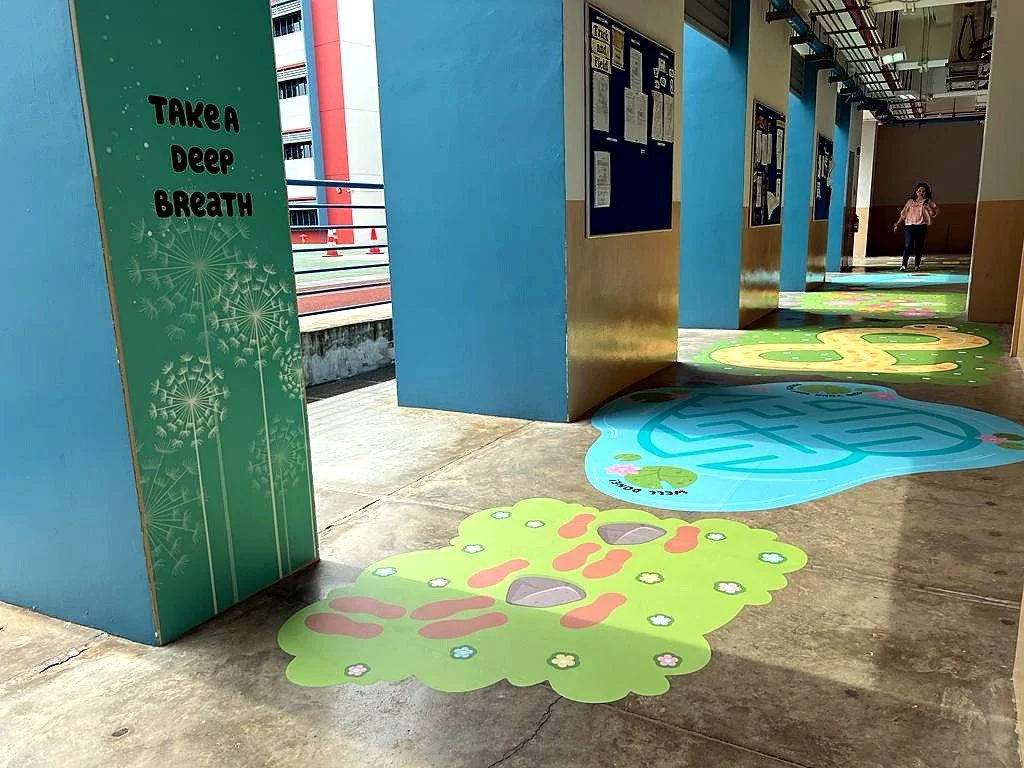
Practical considerations matter too. Schools need solutions that are low maintenance, durable, easy to replace and space-efficient. Using floor and wall stickers allows existing corridors and walkways to become useful sensory spaces without requiring additional rooms, bulky equipment or storage. Individual elements can also be replaced when worn.
For us, the design does not begin with colourful stickers. It begins with understanding the students, consulting the professionals who support them and understanding how the school space is used.
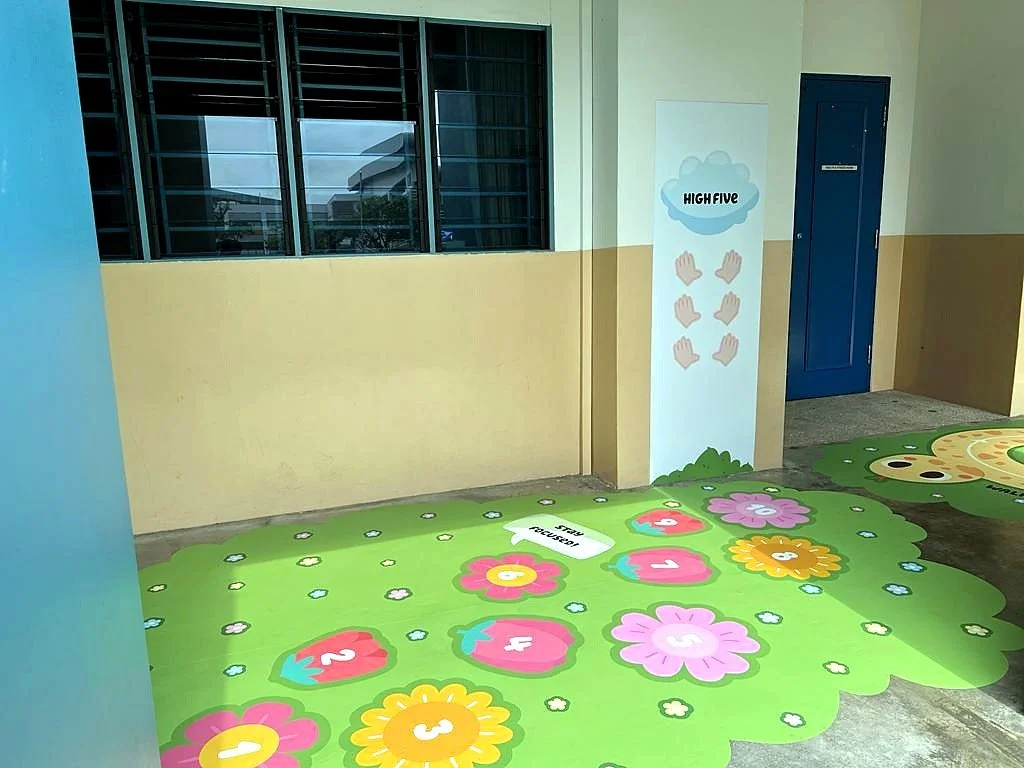
Sensory needs + professional input + space + practical constraints → the right design.
Thinking of Creating a Sensory Trail in Your School?
Little Changemakers works with schools, educators and allied health professionals to design customised sensory trails and interactive spaces around your students, environment and operational needs.
